
Pick Your Extractor
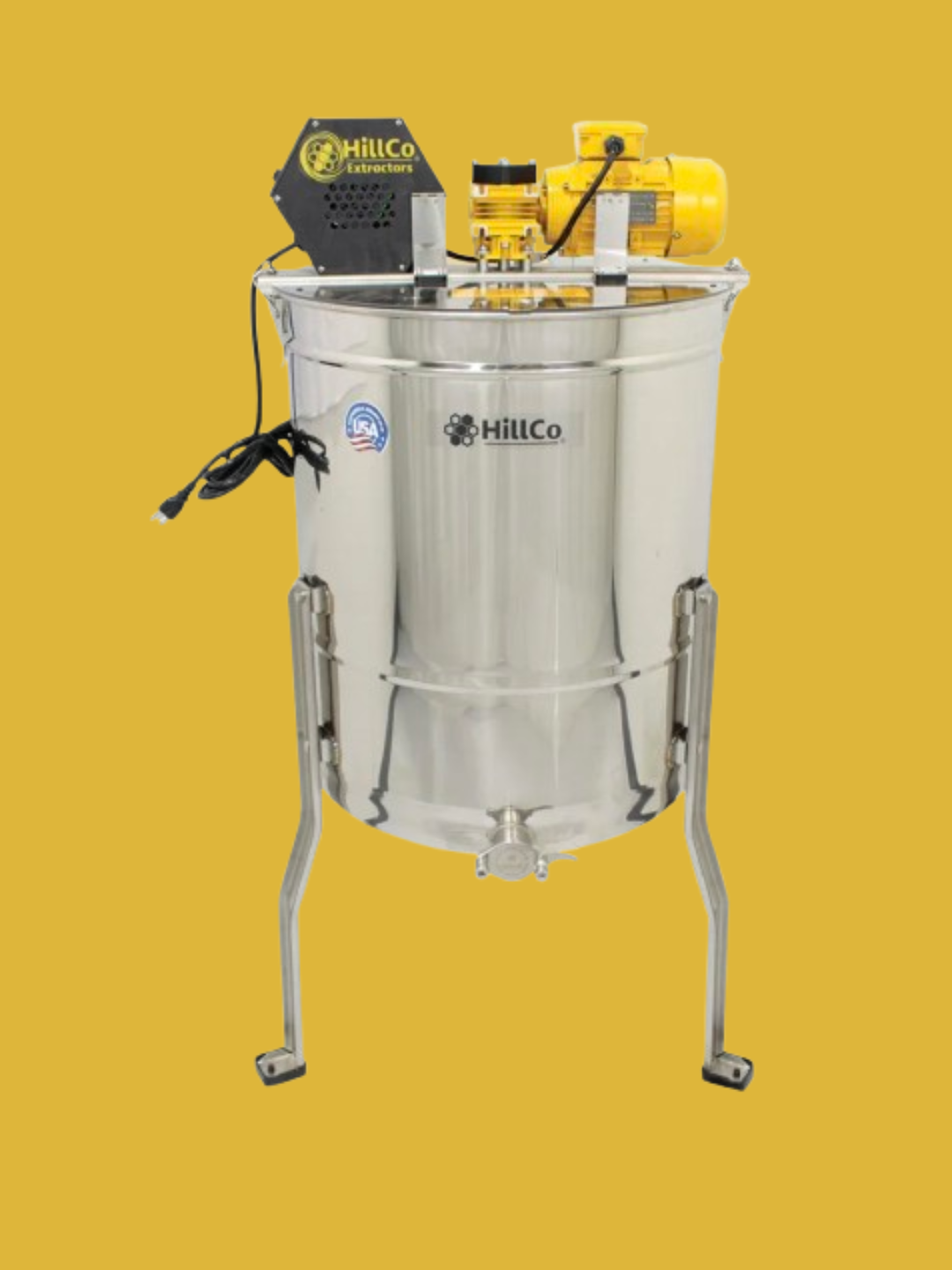
HillCo Layerns Frame Extractor
The HillCo Extractor holds 3 Layens frames and operates tangentially, meaning one side of each frame is extracted before the frames are stopped and flipped to extract the opposite side. It can also accommodate 3 deep Langstroth or 6 medium/shallow Langstroth frames.
QUICK TIPS
Start slow. Increase speed gradually.
Balance your frames. Uneven loading can cause vibration.
Stop completely before opening the lid.
Don't let honey pool in the bottom of the extractor.
Never force a frame into the basket.
VIDEO ON HOW TO USE EQUIPMENT
How to use
Before you start
Make sure the extractor is clean and sanitized.
Place a clean food-safe bucket/container under the honey gate.
Make sure the honey gate is open so honey can drain while extracting.
Check that the extractor is stable and the basket can rotate freely.
Load the frames
5. Place up to 3 Layens frames into the extractor.
6. Balance the frames evenly around the basket.
7. Make sure frames are seated securely before starting.
Extract
8. Close the lid.
9. Start the extractor at a low speed.
10. Gradually increase the speed as honey is removed.
11. Stop the extractor completely before opening the lid.
12. Flip the frames to extract the opposite side.
13. Close the lid and repeat the extraction process.
14. Continue until the frames are adequately emptied.
Finish
15. Stop the extractor.
16. Remove the frames.
17. Close the honey gate when finished.
18. Clean and sanitize the extractor according to the Honey House cleaning SOP.
Important: This is a tangential extractor, so each side of the frame must be extracted separately. Never open the lid while the basket is moving.
COMMON ISSUES
-
Likely causes:
The unit is not plugged into a working outlet.
The power switch/controller is not turned on.
Electrical connection is loose.
Motor, controller, or wiring issue.
Troubleshooting:
Confirm the extractor is plugged into a working outlet.
Check that the power switch/controller is turned on.
Check the power cord and connections for visible damage.
Make sure the reel is not obstructed.
If the unit still does not start, stop troubleshooting and contact Honey House staff.
High Priority
Do not attempt to open or repair the motor, controller, or electrical components yourself.
-
Likely causes:
Frames are not evenly distributed.
Frames are not seated correctly in the basket.
Extractor is overloaded.
The frame or reel is contacting another component.
Troubleshooting:
Stop the extractor completely.
Open the lid once the basket has stopped moving.
Check that the frames are positioned correctly.
Make sure the load is balanced.
Confirm that no frame is loose or interfering with the reel.
Restart at a low speed and gradually increase.
High Priority
Do not continue operating an extractor that is shaking severely. Excessive vibration can damage the equipment.
-
Likely causes:
Frames were not fully uncapped.
Extractor is being run too slowly.
Honey is particularly thick or cold.
Only one side of the frame has been extracted.
Frames are positioned incorrectly.
Troubleshooting:
Confirm that both sides of the frame have been properly uncapped.
Start extraction at a lower speed.
Gradually increase speed as appropriate.
Stop the extractor before removing or flipping frames.
Flip the frames and extract the opposite side.
If honey remains unusually difficult to extract, consult Honey House staff.
Medium Priority
-
Likely causes:
The extraction speed is too high.
Comb is new or structurally weak.
Frames are not properly seated.
Frames are being handled while the basket is moving.
Troubleshooting:
Stop the extractor.
Inspect the frame and comb for damage.
Make sure the frame is properly positioned.
Restart at a lower speed.
Increase speed gradually only if the comb remains intact.
High Priority
Stop immediately if frames are repeatedly breaking or becoming damaged. -
Likely causes:
The frame or reel is contacting another component.
Loose component.
Obstruction in the reel.
Bearing, gearbox, or motor issue.
Troubleshooting:
Stop the extractor immediately.
Disconnect power if appropriate.
Check for visible obstructions.
Check that frames are properly seated.
Do not attempt to disassemble the motor or gearbox.
Contact Honey House staff if the noise continues.
High Priority
-
Likely causes:
Honey gate is closed.
Honey is too thick.
Wax or debris is blocking the gate.
Bucket/container is positioned incorrectly.
Troubleshooting:
Confirm that the honey gate is open.
Make sure the collection bucket is correctly positioned.
Check for visible wax or debris around the gate.
Allow thick honey additional time to drain.
Do not insert tools into the honey gate while the equipment is operating.
Clean the gate according to the Honey House cleaning SOP.
Medium Priority
-
Likely causes:
Equipment was not cleaned immediately after use.
Wax pieces accumulated during extraction.
Honey remained on the tank, reel, or honey gate.
Troubleshooting:
Stop and disconnect the equipment.
Remove remaining frames.
Remove visible wax and honey residue.
Clean and sanitize all food-contact surfaces according to the Honey House cleaning SOP.
Pay particular attention to the honey gate and lower portion of the tank.
Leave the equipment clean and ready for the next user.
High Priority
SAF Natura Combo Extractor
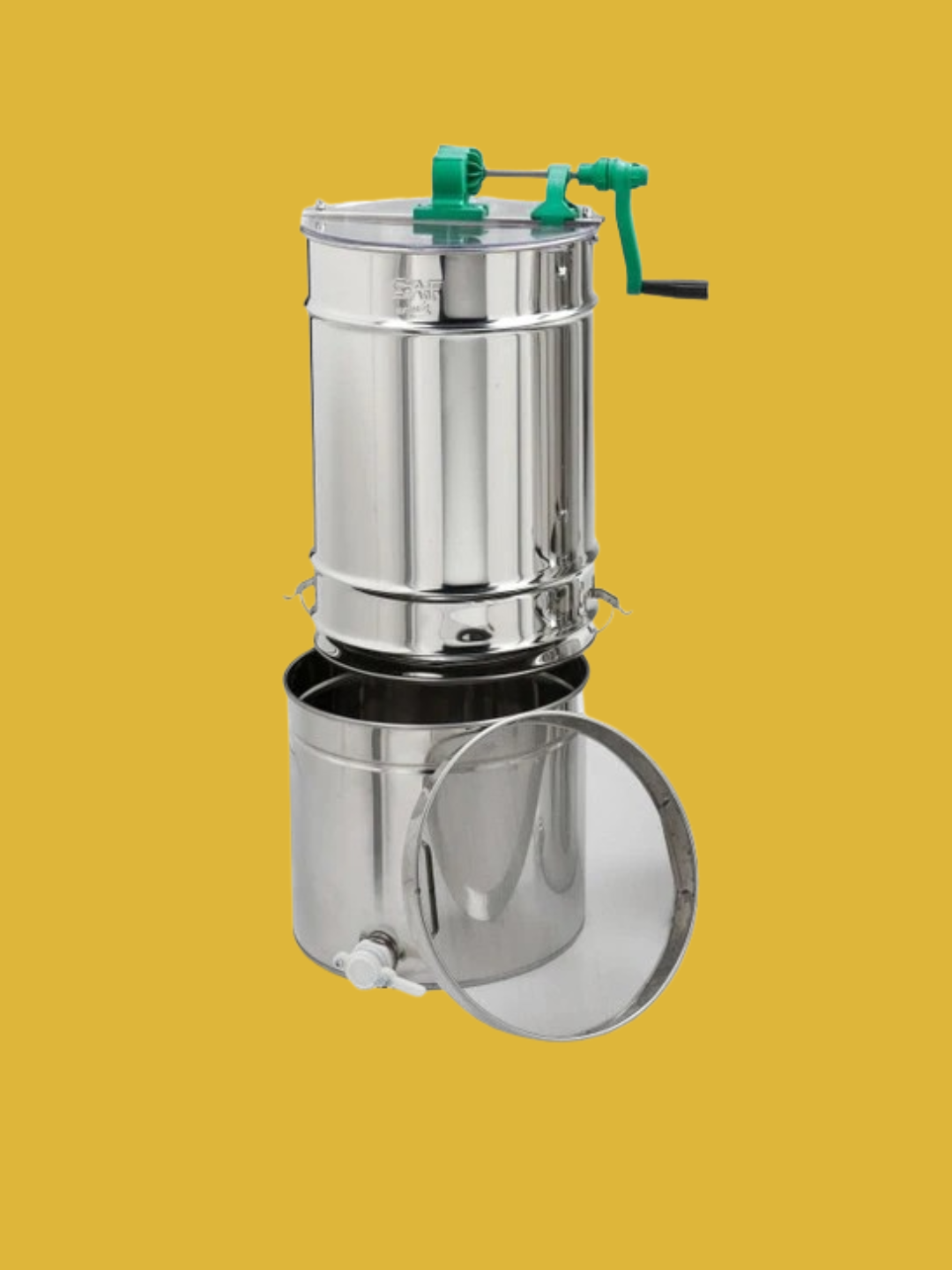
The SN350 is a tangential extractor paired with a 50 kg settling tank and filtering sieve. The SAF Natura product listing identifies the extractor as a 2-frame/4-frame model, depending on frame configuration. It can also accommodate 3 deep Langstroth or 6 medium/shallow Langstroth frames.
QUICK TIPS
Balance the frames before turning the crank.
Start slowly and increase speed gradually.
Stop before opening the lid.
Keep an eye on the filter and settling tank while extracting.
Don’t force the crank if the basket becomes difficult to turn.
Clean wax and honey from the filter before it becomes difficult to remove.
VIDEO ON HOW TO USE EQUIPMENT
How to use
Before you start
Make sure the extractor, basket, filter, and settling tank are clean and sanitized.
Place a clean container under the honey outlet if needed.
Make sure the honey outlet is open and the settling tank/filter is properly positioned.
Load the frames
Open the extractor lid.
Place up to 2 full-size frames in the basket, positioned opposite each other for balance.
Make sure the frames are seated securely.
Extract
Close the lid.
Turn the crank slowly to begin extraction.
Gradually increase the speed as hone is removed.
Stop and turn the frames around to extract the opposite side.
Repeat until the frames are adequately emptied.
Filter & Settle
Allow the extracted honey to drain through the built-in filter/sieve.
Monitor the settling tank so it does not overfill.
Allow honey to settle before transferring or bottling, according to the Honey House SOP.
Use the settling tank’s outlet to transfer honey when ready.
Finish
Remove the empty frames.
Close the honey outlet.
Clean and sanitize the extractor, basket, filter, and settling tank according to the Honey House cleaning SOP.
Important: This is a tangential extractor, so frames must be turned over to extract both sides.
COMMON ISSUES
-
Likely causes:
Frames are incorrectly positioned.
Extractor is overloaded.
Frame is contacting the basket or drum.
Honey or wax buildup is interfering with movement.
Troubleshooting:
Stop turning the extractor.
Remove the lid if necessary.
Check that frames are properly seated.
Confirm that the basket can rotate freely.
Remove any visible wax or debris.
Do not force the crank if resistance continues.
High Priority
Never force the crank. Continued force may damage the drive mechanism.
-
Likely causes:
Frames are unevenly distributed.
Frames are not properly seated.
The extractor is not positioned securely.
The extraction speed is too high.
Troubleshooting:
Stop the extractor completely.
Check that the extractor is sitting securely.
Redistribute the frames evenly.
Make sure frames are properly positioned in the basket.
Restart slowly.
Increase speed gradually.
High Priority
Stop using the extractor if it continues to move, rock, or vibrate excessively.
-
Likely causes:
Frames have not been fully uncapped.
Honey is thick.
The extraction speed is too low.
One side of the frame has not yet been extracted.
Troubleshooting:
Confirm that the frame has been properly uncapped.
Start extraction gradually.
Stop the extractor completely.
Flip the frame.
Extract the opposite side.
Repeat as necessary.
Medium Priority
-
Likely causes:
The honey valve is closed.
Honey is too thick.
Wax or debris is blocking the valve.
The collection container is full or incorrectly positioned.
Troubleshooting:
Confirm that the honey valve is open.
Check the container below the outlet.
Inspect the valve for visible wax or debris.
Allow thick honey additional time to drain.
Clean the valve according to the Honey House cleaning SOP.
Medium Priority
-
Likely causes:
The extractor valve is closed.
The connecting/filtering area is blocked.
Honey is too thick to flow efficiently.
The settling tank is positioned incorrectly.
Troubleshooting:
Confirm that the extractor outlet is open.
Check the path between the extractor and settling tank.
Inspect the filter/sieve for wax or debris buildup.
Make sure the settling tank is positioned securely.
Do not force honey through a blocked filter.
Stop and clean the filter if necessary.
Medium Priority
-
Likely causes:
Excess wax or comb debris in extracted honey.
Filter/sieve has not been cleaned.
Honey is particularly thick.
Troubleshooting:
Stop adding honey to the filter.
Allow the honey already in the system to drain.
Remove the filter/sieve according to the equipment instructions.
Remove accumulated wax and debris.
Clean and sanitize the filter.
Reinstall before continuing.
Medium Priority
-
Likely causes:
Valve is not fully closed.
Valve connection is loose.
Debris is preventing the valve from sealing. Damaged gasket or valve component.
Troubleshooting:
Stop extraction.
Close the valve.
Clean honey and wax from around the connection.
Check that the valve is properly seated.
Inspect for visible damage.
If the valve continues to leak, stop using the equipment and notify Honey House staff.
High Priority
-
Likely causes:
Too much honey is entering the tank.
Honey is not draining from the tank.
Outlet/valve is closed.
The filter is clogged.
Troubleshooting:
Stop extraction immediately.
Close the flow from the extractor.
Check the settling tank’s outlet.
Check the filter for blockage.
Allow the tank to drain before continuing.
Clean up any spilled honey immediately.
High Priority